Getting Your Storm and Gutter Drains Ready for a Kitsap Winter
A drain that's managed fine all summer can get overwhelmed the first heavy week of fall rain.
September 17, 2026 · 3 min read
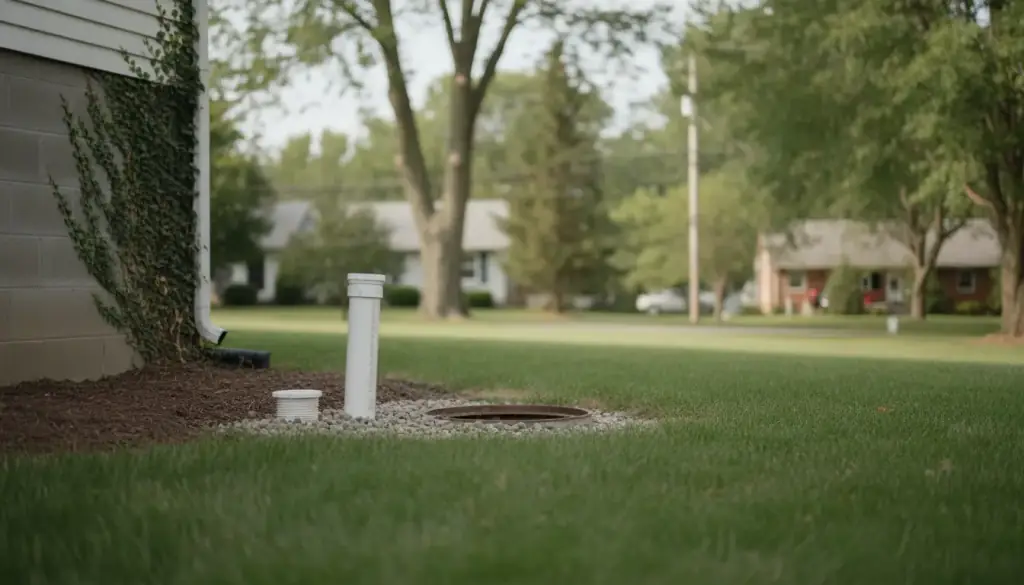
Kitsap County doesn't really have a dry season so much as a less wet one, and the drains around a house, curtain drains, storm drains, gutter downspouts, and foundation drains, spend most of the year handling a manageable trickle before getting asked to handle a lot more all at once the first time a real autumn system rolls through. That's usually when a drain that's been slowly filling with silt, leaves, or root hair for a year finally shows it.
A little attention before the heavy rain starts is worth a lot more than dealing with a flooded planting bed or a wet crawl space in the middle of a storm.
Curtain drains: the ones you never see until they fail
A curtain drain intercepts water uphill of a house or a low spot before it can pool where you don't want it, usually a buried perforated pipe wrapped in gravel and fabric. Because it's buried, nobody thinks about it until the ground it was protecting turns soft or a basement wall starts showing damp. Fine silt works its way through the fabric over years and slowly narrows the pipe from the inside, and by the time it's visibly not working, it's usually been struggling for a season or two already.
If a spot in the yard is consistently wetter than the rest after rain, or new dampness has shown up somewhere that used to be dry, that's worth a look before winter rather than after the ground is saturated for months.
Storm drains and why leaves are the real enemy
A storm drain that's fine in July can back up in November for one simple reason: the trees that shaded it all summer just dropped everything they had onto the grate. Leaves, needles, and the silt that collects around them are the single most common cause of a storm drain backing up in this part of Washington, and it's the easiest of these problems to prevent, since it just needs clearing before the first heavy rain rather than any real repair.
A grate that's been cleared can still back up if the pipe underneath has debris further down, which is where camera and locating equipment earns its keep, showing whether the problem is what you can see at the surface or something sitting a few feet into the line.
Gutters, downspouts, and where that water actually goes
A clogged gutter overflows right at the foundation, which is exactly where you don't want a winter's worth of rain landing. Downspouts that dump close to the house, rather than tying into a drain line that carries water further out, put a lot of pressure on the soil right against the foundation over a wet season. It's worth tracing where each downspout actually discharges, not just assuming it connects to something.
Downspout extensions and splash blocks are simple and cheap compared to what a season of water pooling against a foundation can do to it, and they're one of the easiest things to check before the rain sets in rather than after.
- Clear leaves and debris off every storm drain grate before the first real rain
- Check for standing water in low spots that weren't wet in summer
- Confirm each downspout actually discharges somewhere useful, not onto the ground at the foundation
- Look for damp basement or crawl space walls that weren't damp before
- Have a sluggish curtain or foundation drain run with a camera before it's fully blocked
What to do about the ones that are already struggling
Hydro blasting and jetting clears root intrusion and packed silt out of a drain line far more thoroughly than a snake, which only punches a hole through a blockage rather than clearing the pipe wall. For curtain drains and storm lines that have been slow for a while, that's usually the difference between a fix that lasts one storm and one that holds up for the season.
A camera run is worth it here too. It shows whether a storm or curtain drain is dealing with a straightforward buildup of silt and leaves or something more structural, like a crushed or offset section, which changes whether jetting alone solves it or something more is needed. Budget Rooter offers free estimates on this kind of work, so there's no cost to finding out what's actually going on before winter sets in.
Budget Rooter Plumbing Service, (360) 362-8350
Call (360) 362-8350